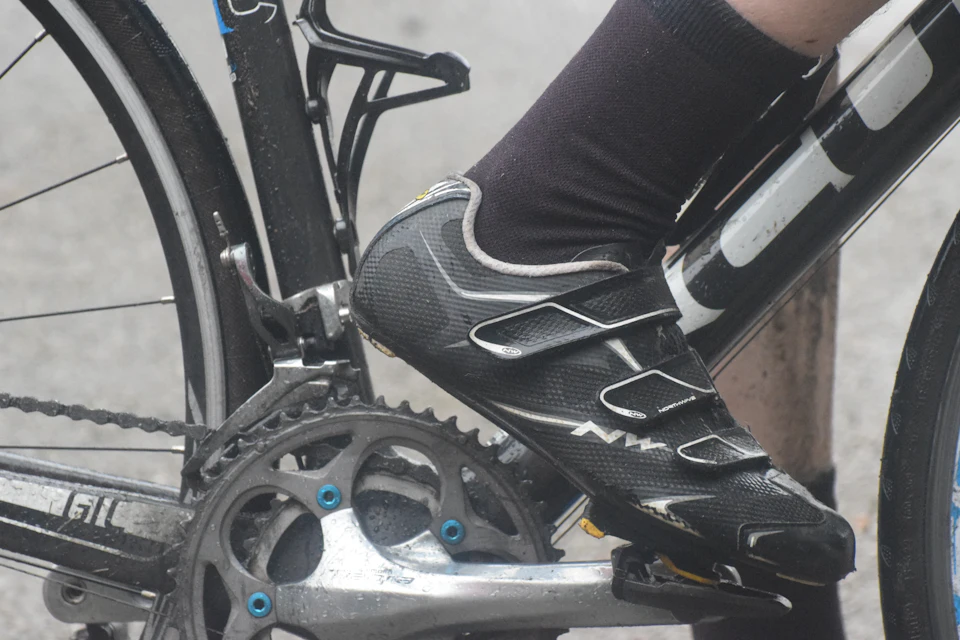
A brick workout is a training session where you go straight from one discipline to the next, most often a bike ride followed immediately by a run. It teaches your legs to run after cycling and gives you a chance to practise T2, the change from bike to run. Bricks are a regular part of most sprint and Olympic training plans.
What a brick workout is
In a triathlon you never start the run fresh. You climb off the bike, rack it, change shoes and set off with legs that have been pedalling for anything from twenty minutes to over an hour. The first few minutes of running usually feel heavy, short-strided and uncoordinated. A brick reproduces that feeling in training, so it is familiar on race day.
The common form is bike then run. You can also do a swim-to-bike brick to practise T1, the change from swim to bike, though this needs a pool or open-water venue close to where you can ride. Some athletes also link several short bike and run blocks together in one session. People use brick workout, brick session and just brick to mean the same thing.
Why is it called a brick?
The origin of the name is not documented. You will see explanations that the legs feel like bricks after the bike, or that sessions are stacked like bricks, or that the word is short for a longer phrase. We have not found a reliable source for any of them, so we treat the origin as unknown. What matters is the meaning: two disciplines back to back.
What a brick session does for you
- Running off the bike. Your legs get used to the switch from pedalling to running, so the awkward phase gets shorter and less of a shock.
- Pacing. You learn how hard you can ride and still run well. You may find you need to ease off in the last part of the bike.
- Transition practice. Every brick is a chance to rehearse racking the bike, taking off the helmet and getting into running shoes.
- Kit testing. You can find out if your tri suit, shoes and laces work together before race day.
Swim-to-bike bricks
A swim-to-bike brick practises T1, the change from swim to bike. It is harder to organise, because you need somewhere to swim and somewhere safe to ride close together. The simplest version is a pool swim followed by a short turbo session at home as soon as you get back, which still teaches you to ride with tired arms and a raised heart rate. If your race is in open water, practise getting out of your wetsuit quickly after supervised open-water sessions, then ride later the same day.
Example brick workouts for sprint triathlon
A sprint triathlon under British Triathlon's 2026 rules has a 20 km bike and a 5 km run. Brick runs for sprint training can be short. These sessions are general guidance; adjust the times to your level.
| Session | Bike | Run | When to use it |
|---|---|---|---|
| First brick | 30 to 40 min easy | 5 to 10 min easy | First time you try it |
| Steady brick | 45 to 60 min steady | 10 to 15 min easy to steady | Build phase, every other week |
| Race-pace brick | 40 min with 2 or 3 blocks of 5 to 8 min at race effort | 10 min, first 5 at race pace | Final weeks before the taper |
| Short repeats | 3 rounds of 10 min bike | 3 rounds of 5 min run | Transition practice with fitness work |
Our sprint triathlon training plan shows where bricks fit in a 12-week structure.
Example brick workouts for Olympic triathlon
The standard (Olympic) distance has a 40 km bike and a 10 km run. The bike part of the brick gets longer, but the run off the bike still does not need to be the full distance.
| Session | Bike | Run | When to use it |
|---|---|---|---|
| Long-ride brick | 1 h 30 min to 2 h 30 min steady | 15 to 20 min easy | Base and build phases |
| Race-effort brick | 60 to 75 min with 2 blocks of 15 to 20 min at race effort | 20 min, middle 10 at race pace | Build and race-specific phases |
| Race rehearsal | Swim, then a ride of an hour or more | 20 to 30 min | Once, a few weeks before the race |
See our Olympic triathlon training plan for how these sit in a 12 to 16-week structure.
How to set up transition practice at home
You do not need a race to practise transition. Set up a small area by your front door or in a garage, close to where you start your ride and run.
- Lay out your run kit on a small towel: running shoes (with elastic laces if you use them), race belt with a number pinned on, and cap or sunglasses if you wear them.
- Keep it compact. Under World Triathlon rules, equipment in transition must stay within half a metre of your bike, and only kit you use in the race may be left there.
- Come back from your ride, get off the bike and put it on a stand or against the wall as you would rack it.
- Only then unclip and take off your helmet. Under World Triathlon rules the chin strap stays fastened until the bike is racked.
- Change into running shoes, clip on the race belt and go.
Time the change once or twice, but do not chase seconds. The goal is a routine you can repeat without thinking. Our guide on what to wear for a triathlon covers the kit you lay out.
Turbo trainer bricks
A turbo trainer, a stand that lets you ride your own bike indoors, makes bricks simple. You can control the effort exactly, there are no traffic lights, and your running shoes can sit by the bike. When you finish the bike block, step off, change shoes and run outside straight away.
Turbo bricks suit dark winter evenings and race-pace sessions, when you want steady efforts without interruptions. Have a fan and a towel, as indoor riding is hot. For outdoor bricks without traffic in East London, the Lee Valley VeloPark road circuit is a 1-mile closed circuit in Queen Elizabeth Olympic Park, with booking required up to 7 days ahead and helmets mandatory. Check its rules on where you can leave kit and whether you can run from there.
Common mistakes
- Running too far off the bike. Long brick runs add fatigue without much extra benefit. Keep the long run as its own session.
- Riding too hard. If every brick bike is flat out, you learn to run badly. Practise the effort you will actually ride on race day.
- Starting the run too fast. Your legs feel slow, so it is tempting to push. Settle into the pace over the first few minutes.
- Too many bricks too early. Build basic fitness in each sport first; add bricks from about halfway through a plan.
- Skipping the change. A brick where you stop for ten minutes between bike and run loses much of its point. Go straight from one to the other.
- Using untested kit. Use bricks to try the shoes, laces and tri suit you will race in.
If you have a medical condition or have been inactive for a while, see your GP before you start hard training, bricks included.
Frequently asked questions
What is a brick workout in triathlon?
A brick workout is two disciplines done back to back with little or no break, most often a bike ride followed straight away by a run. It gets your legs used to running after cycling, which feels heavy and uncoordinated at first, and lets you rehearse T2, the change from bike to run. Some athletes also do swim-to-bike bricks to practise T1.
Why is it called a brick workout?
Nobody has documented where the name comes from. Several explanations circulate, such as the legs feeling like bricks after the bike or the idea of building sessions brick by brick, but we have found no reliable source for any of them. In practice, brick and brick session simply mean back-to-back disciplines, usually bike then run.
How long should the run be in a brick session?
For most bricks the run is short: 10 to 20 minutes is plenty for sprint and Olympic training, because the aim is to practise the change and the first part of the run. Longer runs off the bike add fatigue that takes time to recover from. As general guidance, keep the long run as a separate session on another day.
How often should I do a brick workout?
A simple pattern is one brick every other week from around the middle of a 12-week plan, then one a week in the final few weeks before the taper. That is general guidance; if you are recovering well, a short weekly brick from earlier on is also reasonable. More bricks are rarely needed for sprint or Olympic distance.
Sources
- World Triathlon Competition Rules 2026, sections 5.2(g) and 7, checked 6 October 2026
- British Triathlon Competition Rules 2026 (April 2026), Appendix A, checked 6 October 2026
- Better: Lee Valley VeloPark road cycling, checked 6 October 2026