British Triathlon rules set the standard for most races in the UK. For age-groupers, the key points are simple: a wetsuit is mandatory below 15.9 °C, the bike draft zone is 12 metres with 25 seconds to pass, minimum ages depend on distance, and you race with either a Race Pass or a Core or Ultimate membership.
This page summarises the British Triathlon Competition Rules 2026 (the April 2026 version) for people who race in their age group. An age-grouper is any amateur who competes against others of a similar age, as opposed to elite or professional athletes. The rules are updated every year and sometimes more than once a year, so treat this page as a guide and read the current British Triathlon document before your race.
Which rules apply to UK races
British Triathlon publishes its competition rules as a PDF linked from its Competition Rules page. Races permitted by British Triathlon in Great Britain follow that document. The 2026 version we used is dated April 2026 and runs to 51 pages.
Races abroad are a different matter. The British Triathlon document itself says that events outside Great Britain held under World Triathlon rules follow the World Triathlon rules. We explain the main differences further down. Your race briefing and athlete information can add local rules on top, such as course-specific penalties or where you may mount your bike.
British Triathlon wetsuit rules
Rule 4.2 sets when a wetsuit is mandatory and when it is forbidden, based on water temperature, swim length and your age. Your age for these purposes is your age on 31 December of the race year.
| Swim length | Age | Wetsuit mandatory below | Wetsuit forbidden above |
|---|---|---|---|
| Up to 1500 m | Up to and including 59 | 15.9 °C | 22 °C |
| Up to 1500 m | 60 and above | 15.9 °C | 24.6 °C |
| 1501 m and above | All ages | 15.9 °C | 24.6 °C |
Between those two figures the wetsuit is optional. The rules also recommend that novices and age-groupers up to 59 wear one up to 22 °C, and that those aged 60 and over wear one up to 24.6 °C. Our guide to triathlon wetsuits covers fit and what to look for.
Cold water limits
Rule 4.4 deals with very cold water. Below 11 °C there can be no open-water swim in a competition, with the temperature taken one hour before the start. Above that, the swim is shortened as the water gets colder:
| Water temperature | Maximum swim distance |
|---|---|
| 13 °C | 1000 m |
| 12 °C | 600 m |
| 11 °C | 300 m |
| Below 11 °C | No open-water swim |
This is why an early-season race can turn into a shorter swim or a duathlon at short notice. Organisers usually explain their plan in the athlete information.
Drafting rules on the bike
Drafting means riding close behind another cyclist to shelter from the wind. It saves energy, so races state whether drafting is allowed. Your race information tells you whether your race is draft-legal or non-drafting.
In a non-drafting race, British Triathlon defines the bike draft zone as a space 12 metres long, measured from the leading edge of the front wheel of the rider ahead. The rules work like this:
- You may enter another rider's draft zone, but only to overtake, and you must be seen to make progress.
- You have a maximum of 25 seconds to pass through the zone.
- Consecutive unsuccessful attempts to overtake can be an infringement in themselves.
- Behind a motorbike, the draft zone is 15 metres.
Twelve metres is a long gap on a road. Practise judging it on rides before race day.
Minimum ages by distance
Appendix A of the British Triathlon rules lists the standard distances and the minimum age for each. As with wetsuits, age is counted at 31 December of the race year.
| Format | Swim / Bike / Run | Minimum age |
|---|---|---|
| Triathlon super sprint | 250 m / 10 km / 2.5 km | 15 |
| Triathlon sprint (pool) | 400 m / 20 km / 5 km | 15 |
| Triathlon sprint (open water) | 750 m / 20 km / 5 km | 15 |
| Triathlon standard | 1500 m / 40 km / 10 km | 17 |
| Triathlon middle | up to 3000 m / up to 90 km / up to 21.9 km | 18 |
| Triathlon long | up to 4000 m / up to 200 km / up to 42.2 km | 19 |
| Duathlon sprint | run 5 km / bike 20 km / run 2.5 km | 15 |
| Duathlon standard | run 10 km / bike 40 km / run 5 km | 17 |
| Aquathlon sprint | swim 500 m / run 2.5 km | 15 |
The traditional middle distance is 1900 m, 90 km and 21.1 km, and the traditional long distance is 3800 m, 180 km and 42.2 km. Organisers may set a higher minimum age than the rules require. Read the entry conditions for each race. For a fuller look at what each distance involves, see our triathlon distances guide.
British Triathlon membership and the Race Pass
British Triathlon requires you to have public liability insurance to race in an event it permits. You can get that cover in two ways: a membership that includes a race licence, or a Race Pass for each race.
Race Pass
A Race Pass is a one-race licence. If you live in the UK and are not a Core or Ultimate member, you need one for each British Triathlon-permitted race. It costs £2 if you are up to 24 and £8 from age 25, with age counted at 31 December. It is valid only for the race you buy it for and includes public liability cover of up to £15 million. If it is not included in your race entry, you buy it through the British Triathlon Event Search.
Membership levels
| Level | Price | What it includes |
|---|---|---|
| Community | Free account | An account with British Triathlon |
| Starter | £25, one-off price | £15 million public liability cover in training (UK only) and one free Race Pass for a permitted event bought on the British Triathlon website |
| Core | £35 under 25; £70 adult | 12-month race licence (no Race Pass needed) and £15 million public liability cover in training and racing |
| Ultimate | £50 under 25; £100 adult | Everything in Core, plus personal accident cover, worldwide cover and eligibility for the age-group GB team |
All prices were checked on 6 October 2026. Prices and benefits change, so confirm them on the British Triathlon website before you pay. If you plan only one or two races a year, Race Passes may cost less than a membership. If you race often or want cover while training, compare the totals.
Transition and helmet basics
Transition is the area where you change between disciplines: T1 is swim to bike, and T2 is bike to run. The rules here are strict and easy to break by accident, so learn the basics before race day.
Helmets
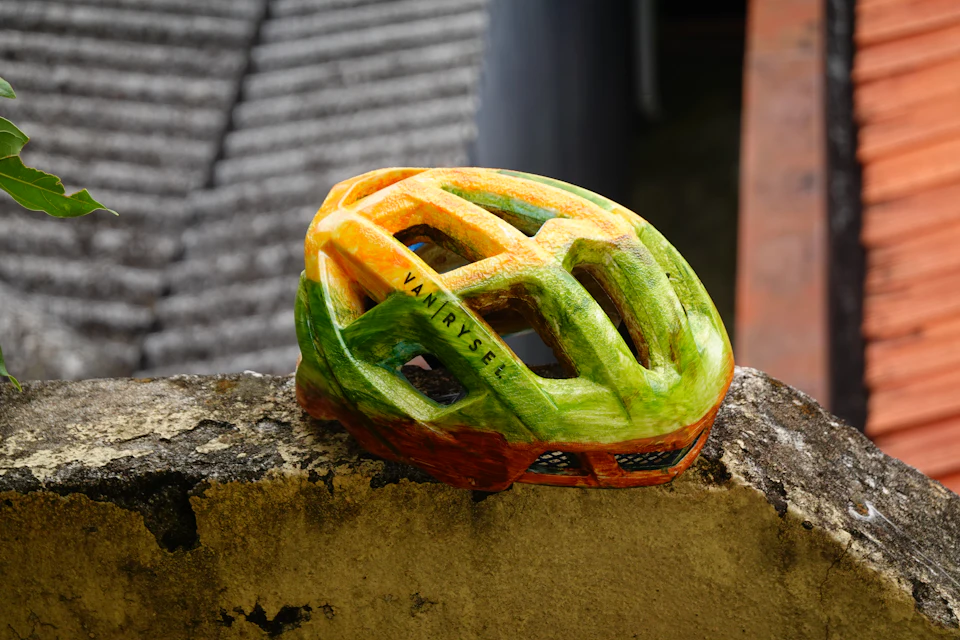
The British Triathlon rules have a helmet section (rule 5.2 g). One point needs care. The requirements that the helmet must not cover the ears and must have no visor are marked in the British Triathlon document as "applicable for draft legal races only". They are not a general rule for every UK age-group race, so check the current document if you use an aero helmet with a visor.
The World Triathlon rules, which we read in full, say your helmet must be approved by a nationally accredited testing authority and worn for all riding. The chin strap must be fastened before you take your bike off the rack and stay fastened until the bike is back on the rack after the ride. Treat that as the habit to learn. Fasten your helmet first, then unrack.
Transition area
The transition rules we read in full come from the World Triathlon document (section 7). Under those rules:
- Your kit must stay within 0.5 m of your bike or your box.
- You may leave only equipment you will use in the race.
- You may not mark your position with towels or other marks; these are removed.
- Your wetsuit may be fully removed only at the designated area or at your transition spot.
British Triathlon's own transition rules are in its document and your race briefing will add details such as mount and dismount lines. Our guide to what to wear for a triathlon includes a transition kit list.
Racing abroad: World Triathlon rules
If you enter a race outside Great Britain held under World Triathlon rules, those rules apply. The numbers are close to British Triathlon's but some differ. These figures come from the World Triathlon Competition Rules 2026 (version marked 13 December 2025, with highlights to 29 April 2026):
- Wetsuits: for age-groupers up to the 55–59 category, forbidden at 22 °C and above for swims up to 1500 m and at 24.6 °C and above for longer swims; for 60–64 and older, forbidden at 24.6 °C and above. Mandatory at 15.9 °C and below.
- Drafting: the bike draft zone is 12 metres, with 25 seconds to pass through. Age-group racing is draft-illegal at standard, middle and long distance. Behind a vehicle the zone is 35 metres.
- Minimum ages: 15 for super sprint, 16 for sprint, and 18 for standard, middle and long distance. British Triathlon allows 15 for sprint and 17 for standard, so a 17-year-old who can race a UK standard-distance event may not be able to race one abroad.
Check the event's athlete guide well before you travel for anything the organiser adds.
How to stay up to date
Rules change. The 2026 document we used is the April 2026 version, and British Triathlon can publish a new one at any time. Before each season:
- Open the British Triathlon Competition Rules page and download the current PDF.
- Read the wetsuit, drafting, helmet and transition sections.
- Read your race's athlete information for anything specific to that course.
- Check whether your Race Pass or membership is in date.
If you are new to the sport, our triathlon for beginners guide explains how a race day runs, and the UK triathlon events calendar lists 2027 races with official dates.
Frequently asked questions
Is a wetsuit compulsory in UK triathlons?
Under the British Triathlon Competition Rules 2026, a wetsuit is mandatory when the water is below 15.9 °C. Above that it is optional until the upper limit: 22 °C for swims up to 1500 m if you are 59 or younger, and 24.6 °C for older age groups and longer swims. The race information tells you the decision on the day.
How long can I stay in the draft zone on the bike?
In a non-drafting race the draft zone behind another rider is 12 metres, measured from the leading edge of their front wheel. You may enter it to overtake, but you must be seen to make progress and you have a maximum of 25 seconds to get through. Behind a motorbike the zone is 15 metres. Repeated failed attempts can count as an infringement.
Do I need British Triathlon membership to enter a race?
You need public liability cover for British Triathlon-permitted events. Core and Ultimate members have a 12-month race licence, so they need nothing else. Everyone else living in the UK buys a Race Pass for each race: £2 up to age 24 and £8 from 25, as checked on 6 October 2026. Prices change, so check the British Triathlon website.
What is the minimum age for a sprint triathlon in the UK?
British Triathlon sets 15 as the minimum age for super sprint and sprint triathlons, 17 for standard (Olympic) distance, 18 for middle distance and 19 for long distance. Age is counted at 31 December of the race year. Individual organisers can set a higher limit, so always read the entry conditions on the race page before you book.
Sources
- British Triathlon Competition Rules 2026 (April 2026): rules 4.2, 4.4, drafting, 5.2 g and Appendix A, checked 6 October 2026
- British Triathlon: Competition Rules page, checked 6 October 2026
- British Triathlon: Membership, checked 6 October 2026
- British Triathlon: Race Pass, checked 6 October 2026
- World Triathlon Competition Rules 2026 (version of 13 December 2025, highlights to 29 April 2026): sections 4.2, 5.2, 5.5, 7 and Appendix A, checked 6 October 2026