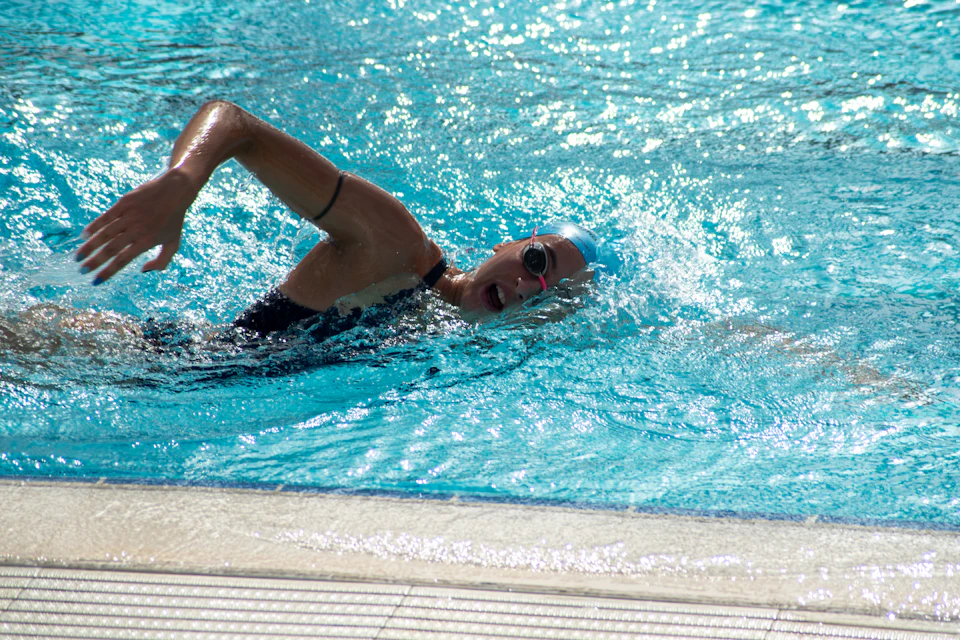
Triathlon for beginners in the UK starts with a short race: a super sprint or a sprint, and some sprints use a pool for the swim. To race you need a British Triathlon Race Pass or membership, kit you mostly own already, and a few months of regular swimming, cycling and running. This guide takes you through each step.
What a triathlon involves
A triathlon is a swim, a bike ride and a run, done one after the other with the clock running throughout. The changes between them happen in an area called transition. T1 is the change from swim to bike, and T2 is the change from bike to run. Your time in transition counts towards your finish time, so a calm, practised routine there matters as much for a beginner as fitness does.
Most people who race are age-groupers: amateurs who compete against others in the same age band. You do not need to be fast to take part, and finishing is a perfectly good goal for a first race.
Choose your first race
British Triathlon's Competition Rules 2026 (April 2026 version) set out the standard formats in Appendix A. The two shortest are the natural place to start.
| Format | Swim | Bike | Run | Minimum age |
|---|---|---|---|---|
| Super sprint | 250 m | 10 km | 2.5 km | 15 |
| Sprint (pool) | 400 m | 20 km | 5 km | 15 |
| Sprint (open water) | 750 m | 20 km | 5 km | 15 |
| Standard | 1500 m | 40 km | 10 km | 17 |
Minimum ages are taken as at 31 December of the race year. Organisers describe their own courses, and the event page always has the final word on distances.
A pool-based sprint is a good first race if open water makes you nervous. The swim is in a pool, so you deal with lanes and walls instead of cold water, waves and sighting. An open-water sprint adds those skills and, depending on water temperature, a wetsuit. A super sprint keeps every leg short, which suits people coming to the sport with little background in one of the three disciplines.
When you compare races, look at the swim venue, whether the bike course is on open or closed roads, the start time and how far the race is from home. A local race with an early start is easier when you are not travelling the night before.
British Triathlon Race Pass and membership
Every event permitted by British Triathlon requires you to have public liability cover. If you live in the UK and are not a Core or Ultimate member of British Triathlon, you need a Race Pass. A Race Pass covers only the race you buy it for and includes public liability cover of up to £15 million.
- Up to age 24: £2 per race.
- Age 25 and over: £8 per race.
Age is taken as at 31 December. Some entries include the Race Pass. If yours does not, you buy it through British Triathlon's Event Search.
Membership is the other route. The tiers on British Triathlon's membership page are:
| Tier | Price | What it includes |
|---|---|---|
| Community | Free | A free account |
| Starter | £25, one-off price | £15 million public liability cover in training (UK only); one free Race Pass for a permitted event bought on British Triathlon's website |
| Core | £35 under 25; £70 adult | 12-month race licence, so no Race Pass needed; £15 million public liability cover in training and racing |
| Ultimate | £50 under 25; £100 adult | Everything in Core, plus personal accident cover, worldwide cover and eligibility for the GB age-group team |
Prices were checked on 6 October 2026 and change from time to time, so confirm them on British Triathlon's site before you pay. For one trial race, a Race Pass is the simple option. If you expect to race several times in a year, compare the cost of the passes with Core, which also gives you cover while training. Our guide to British Triathlon rules covers licences and race rules in more detail.
Finding events and clubs
British Triathlon's Event Search lists events it permits across the UK, and it is also where you buy a Race Pass when an entry does not include one. For dates, course details and entry, always follow through to the organiser's own page.
British Triathlon's website also lists clubs. A club can give you group sessions, coaching and people to ask. Tri Almanac is an independent guide and is not a club, so we do not recommend particular clubs. Look at a few near you, check when they train and ask whether they have a beginners' group.
The minimum kit
You can do a first sprint with very little specialist kit. The essentials are:
- A swimsuit or tri suit (a one-piece or two-piece outfit you wear for all three legs), and goggles.
- A roadworthy bike that fits you, with working brakes and pumped tyres. A hybrid or mountain bike can do the job for a first race.
- A cycling helmet. You wear it for the whole bike leg, and under World Triathlon rules the chin strap must be fastened before you take the bike off the rack and stay fastened until it is back on the rack.
- Running trainers you have already trained in.
- A wetsuit, only for open-water races when the water is cold. For training, some venues hire them: Love Open Water at the Royal Docks lists wetsuit hire at £10 a session (checked 6 October 2026).
Useful extras are a race belt for your number, elastic laces and a small towel to stand on. Our guide to what to wear for a triathlon goes through each item and the order you put things on.
A simple first-race timeline
- Check your health. If you have a medical condition or have been inactive for a while, see your GP before you start hard training.
- Pick a race a few months away, at a distance that suits your current swimming.
- Enter and sort your Race Pass or membership at the same time.
- Train regularly in all three sports. Our 12-week sprint triathlon training plan sets out a weekly structure.
- From about halfway through, add brick sessions: a bike ride followed straight away by a short run, so your legs learn the change.
- For an open-water race, practise at a supervised venue, ideally in the wetsuit you will race in.
- In race week, read the race briefing, check your bike and pack your kit the night before.
- On race day, arrive early, register, rack your bike, lay out your transition and go to the swim briefing.
Race-day basics
Transition
Your bike goes on a rack in transition, with your kit laid out beside it. Under World Triathlon rules your equipment must stay within half a metre of your bike, you may only leave kit you use in the race, and you cannot mark your spot with towels or other markers. Walk from the swim exit to your bike and from the bike entry to your rack before the start, so you know your route.
Drafting
Drafting means riding close behind another rider to save energy. In races where it is not allowed, British Triathlon's rules set a bike draft zone of 12 m measured from the front edge of the front wheel. You can enter another rider's zone, but you must be seen to make progress and you have a maximum of 25 seconds to pass through it.
Wetsuit rules
British Triathlon sets wetsuit rules by water temperature, swim length and age (as at 31 December):
- Swims up to 1500 m, ages up to 59: wetsuit mandatory below 15.9 °C, forbidden above 22 °C.
- Swims up to 1500 m, ages 60 and over: mandatory below 15.9 °C, forbidden above 24.6 °C.
- Swims of 1501 m and over, all ages: mandatory below 15.9 °C, forbidden above 24.6 °C.
The rules recommend that novices and age-groupers up to 59 wear one up to 22 °C.
Where to train in London
East London has good pools for steady swim training. The London Aquatics Centre in Queen Elizabeth Olympic Park has two 50 m pools, and London Fields Lido in Hackney is a 50 m pool heated all year round. Booking is through each operator's website or app.
For open water, swim only at supervised venues and never in the Thames, canals or docks outside organised sessions. The West Reservoir Centre in Hackney is open all year round. A tow float (an inflatable buoy clipped to your waist that makes you visible) is mandatory and provided, and you wear a bright red, orange or pink hat. Booking is essential and the minimum age is 14, with 14 to 17-year-olds accompanied by an adult. At the London Royal Docks, Love Open Water requires a tow float for all swimmers and a bright hat, and expects you to swim 400 m unaided. Its page says the venue was reopening in summer 2026, so check its current status. Our guide to open water swimming in London compares the options.
For cycling away from traffic, the Lee Valley VeloPark road circuit is a 1-mile floodlit closed circuit in the Olympic Park. Booking is required up to 7 days ahead, helmets are mandatory and pay and ride costs £7.60 (checked 6 October 2026; prices change).
For running, Hackney Marshes, Mile End, Wanstead Flats and Valentines parkruns take place every Saturday at 09:00, and the Hackney Marshes and Mile End pages say they are free. A weekly parkrun is a simple way to measure your 5 km progress before your first race.
Frequently asked questions
What is the easiest triathlon for a beginner?
The shortest format is the super sprint, which British Triathlon's 2026 rules list as a 250 m swim, 10 km bike and 2.5 km run, with a minimum age of 15. Sprint races with a 400 m pool swim are another gentle start, because you avoid open water on your first attempt. Check the organiser's page, as distances can vary from race to race.
Do I need British Triathlon membership to do a triathlon?
You need public liability cover for any event permitted by British Triathlon. If you live in the UK and are not a Core or Ultimate member, you buy a Race Pass for that race: £2 up to age 24 and £8 from age 25 (checked 6 October 2026). With Core or Ultimate membership you race without a Race Pass. Prices change, so check British Triathlon's site.
Can I do a triathlon on any bike?
For a first race, any roadworthy bike that fits you and has working brakes is a sensible choice, together with a helmet you wear for the whole bike leg. A road or triathlon bike is quicker but you can decide on that later, once you know you enjoy the sport. Check the race briefing for any bike rules.
Do I need a wetsuit for my first triathlon?
Only for open-water races, and only when the water is cold enough. Under British Triathlon rules for swims up to 1500 m, wetsuits are mandatory below 15.9 °C and, for ages up to 59, forbidden above 22 °C. Pool-based sprints need no wetsuit. If you need one, ask the organiser or a local open-water venue about hire before you buy.
Sources
- British Triathlon Competition Rules 2026 (April 2026), rule 4.2, 4.4, drafting and Appendix A, checked 6 October 2026
- British Triathlon: Membership, checked 6 October 2026
- British Triathlon: Race Pass, checked 6 October 2026
- British Triathlon: Events, checked 6 October 2026
- World Triathlon Competition Rules 2026, sections 5.2(g) and 7, checked 6 October 2026
- Better: West Reservoir Centre open water swimming, checked 6 October 2026
- Love Open Water: London Royal Docks, checked 6 October 2026
- London Aquatics Centre, checked 6 October 2026
- Better: London Fields Lido, checked 6 October 2026
- Better: Lee Valley VeloPark road cycling, checked 6 October 2026
- parkrun: Hackney Marshes, checked 6 October 2026
- parkrun: Mile End, checked 6 October 2026