This page has affiliate links. If you buy through them, Tri Almanac may earn a commission; the price you pay is the same and it does not change what we recommend. How we work.
A turbo trainer is a stand that holds your own bike so you can ride indoors. Wheel-on models press a roller against your rear tyre, direct drive models replace the rear wheel, and smart turbo trainers let an app control the resistance. For triathletes in London, a turbo trainer makes winter bike training possible on dark, wet evenings.
This guide explains the main types, what the numbers on a spec sheet mean, and what else you need to buy. We have not tested any of the trainers listed. Prices and specs are as the retailer or brand stated them when we checked on 6 October 2026, and prices change often.
Wheel-on vs direct drive vs smart turbo trainer
Wheel-on trainers clamp the rear axle of your bike and push a roller against the rear tyre. They are quick to set up and you keep your wheel on the bike. The tyre wears against the roller, and many riders fit a dedicated trainer tyre for indoor use.
Direct drive trainers replace your rear wheel. You take the wheel out and the chain runs onto a cassette fitted to the trainer. They tend to feel more stable and avoid tyre wear, and they are the usual choice for regular indoor training.
Smart trainers can be either type. They connect to a phone, tablet or computer and the app sets the resistance. In ERG mode the trainer holds a target power whatever gear you use, which makes structured sessions simple to follow. A trainer without smart control still works, but you change gear and judge effort yourself.
What the turbo trainer spec numbers mean
| Spec | What it tells you |
|---|---|
| Max power (watts) | The most resistance the trainer can produce. It matters mainly for hard sprints; steady triathlon training rarely gets near the limit. |
| Max gradient (%) | The steepest climb the trainer can simulate in an app. |
| Accuracy (±%) | How close the trainer's power reading is to your real output. A smaller number means more consistent data for training by power. |
| ANT+ FE-C | A wireless standard that lets apps and some bike computers read data from the trainer and control its resistance. |
| Bluetooth | Wireless link to phones, tablets and many computers. |
| WiFi | A connection through your home network rather than a direct wireless link to the device. |
| Max rider weight | The heaviest rider the maker says the trainer supports. |
Listed turbo trainer models and UK prices
These are the models we found on UK retailer pages, with the figures as stated. Prices were checked on 6 October 2026 and change often.
| Model | Price (checked 6 October 2026) | What the page states |
|---|---|---|
| Wahoo KICKR CORE 2 with Zwift Cog and Click | £499.99 at Wheelbase | Wheel-off trainer (you remove the rear wheel); 1800W; 16% gradient; WiFi and Bluetooth; ±2% accuracy |
| Wahoo KICKR (WiFi) | £899.99 sale (was £1,099.99) at Wheelbase | "Over 2,200 watts"; WiFi; ERG Easy Ramp; gradient not stated |
| Tacx Flux 2 Smart | £499.00 sale (was £699.99) at Wheelbase | Direct drive; 2000W at 40 km/h; 16% gradient; ANT+ FE-C and Bluetooth; 2.5% accuracy; cassette not included |
| Elite Suito-T | £399.00 sale (RRP £499.99) at Biketart; out of stock on the day | Direct drive; 2,900W at 60 km/h; 15% gradient; FE-C compatible; 2.5% accuracy; cassette not included |
| Wahoo KICKR ROLLR | UK price not stated (the page we read showed euros) | Wheel-on; 1500W; +10%/−10% gradient; WiFi, Bluetooth and ANT+ |
How to read the list for your needs:
- If you want WiFi and Bluetooth in a wheel-off unit with a stated ±2% accuracy, look at the KICKR CORE 2 bundle; check ANT+ support with the retailer if your devices need it.
- If you already own a cassette that matches your bike, the Tacx Flux 2 and Elite Suito-T are listed without one, so check the cost of fitting yours.
- If you would rather keep your wheel on the bike, the KICKR ROLLR is the wheel-on option on this list, but we could not find a UK price.
- The KICKR (WiFi) lists the highest power here, which matters more to riders who sprint hard than to most triathletes.
The Zwift UK store also showed the KICKR CORE 2 bundle when we checked.
What else you need
- A cassette for direct drive trainers where it is not included. It must match the number of gears on your bike. A bike shop can fit it.
- A mat under the trainer to catch sweat and reduce noise and vibration, which helps in flats.
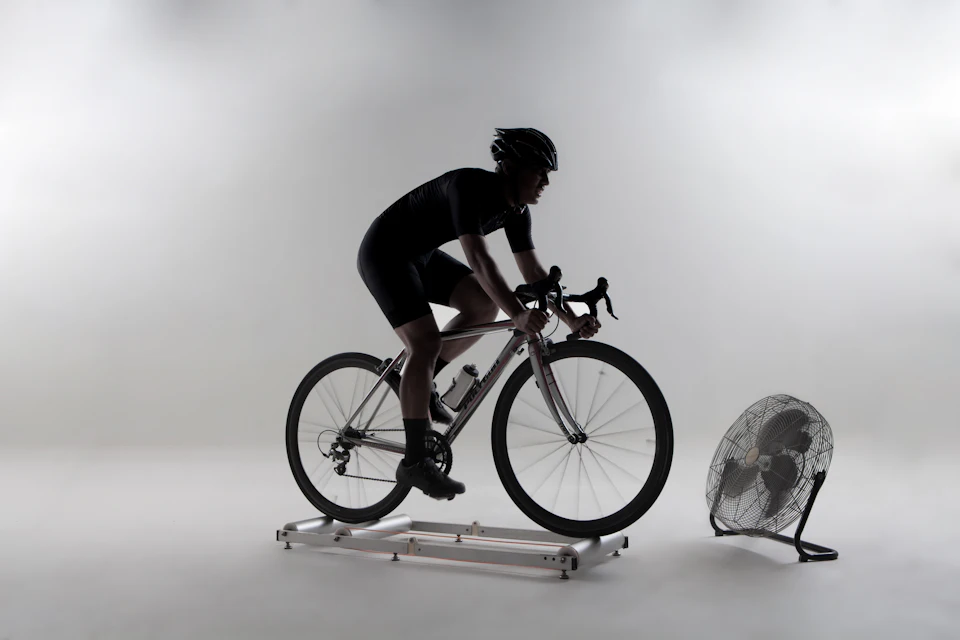
- A fan. Indoors there is no air moving past you, so you heat up quickly. A fan makes longer sessions more comfortable.
- A towel and water. Sweat drips onto the bike, so wipe it down after each session.
- A device for the app or a bike computer, if you plan to train to power or follow workouts.
How triathletes use a turbo trainer in a London winter
Short, dark days and wet roads make outdoor riding harder from autumn to spring. A turbo trainer lets you keep two or three bike sessions a week without needing daylight or a quiet road. As general guidance, a winter week might include:
- One structured session, such as short intervals at a hard effort with easy recoveries.
- One steady ride at an easy, conversational effort, sometimes called zone 2.
- One brick session, a bike ride followed straight away by a short run, to practise running on tired legs. Our brick workout guide explains how to set one up.
Keep at least some riding outdoors for handling skills and confidence in traffic. Closed circuits and parks are covered in our page on cycling training in London. If you use clip-on aero bars, indoor sessions are a safe place to get used to the position; see our triathlon bike guide. For a full weekly structure, see the sprint triathlon training plan.
Training apps
A turbo trainer works without an app. Many triathletes still use one, because apps give structured workouts, virtual routes and, with a smart trainer, automatic resistance. Zwift is one of these apps, and it also sells trainer hardware through its UK store. Subscription prices and trial terms change, so check the app's own website for the current offer before you sign up.
Frequently asked questions
Is a smart turbo trainer worth it for triathlon?
A smart trainer lets a training app set the resistance, so structured sessions such as intervals at a target power are easier to follow. That suits triathletes who train on limited time in winter. A simpler trainer still works if you are happy to change gear and judge effort yourself. Decide by how much you will ride indoors and your budget.
Do I need a cassette for a direct drive turbo trainer?
Check the listing. The Tacx Flux 2 and Elite Suito-T pages we read on 6 October 2026 said the cassette is not included, so you would need to buy and fit one that matches your bike's gears. Some bundles include a cog or cassette. A bike shop can fit the cassette and confirm it suits your bike if you are unsure.
What is the difference between a wheel-on and a direct drive turbo trainer?
A wheel-on trainer clamps your bike's rear axle and presses a roller against the rear tyre, so setup is quick and you keep your wheel on. A direct drive trainer replaces the rear wheel, with the chain running onto a cassette on the trainer. Direct drive models generally feel more stable and avoid tyre wear on the roller.
Do I need Zwift to use a turbo trainer?
No. A turbo trainer works on its own, and you can ride to a plan using a bike computer or a watch. Training apps such as Zwift add virtual routes, structured workouts and, with a smart trainer, automatic resistance. Zwift also sells hardware in the UK. Subscription prices change, so check the app's website for the current offer before you sign up.
Sources
- Wheelbase: Wahoo KICKR CORE 2 with Zwift Cog and Click, checked 6 October 2026
- Zwift UK store, checked 6 October 2026
- Wheelbase: Wahoo KICKR with WiFi, checked 6 October 2026
- Wheelbase: Tacx Flux 2 Smart trainer, checked 6 October 2026
- Biketart: Elite Suito-T direct drive smart turbo trainer, checked 6 October 2026
- Wahoo: bike trainers (EU store page), checked 6 October 2026